How to insulate a garage door
Insulating a garage door can help an attached garage hold temperature, but the door alone is only part of the picture. Here is how R-values, materials, and retrofit options compare.
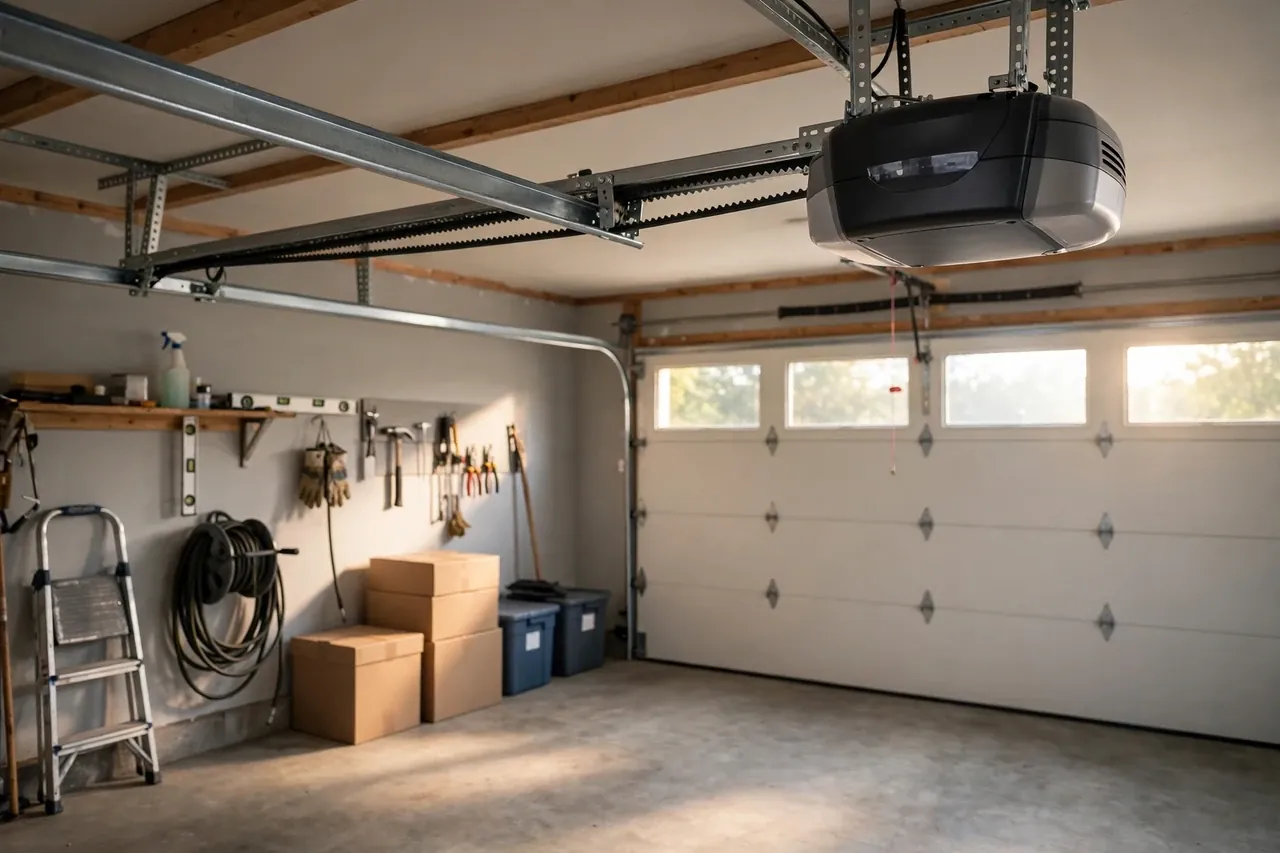
Garage door insulation is about slowing heat movement through the largest moving surface in the garage. For an attached garage with rooms above or beside it, that matters more than for a detached garage used only for storage. For any garage, insulation works best as part of a sealed, insulated whole, not as a lone upgrade to the door.
This guide explains R-values, the two main insulation materials, retrofit kits versus pre-insulated doors, and the mistakes that waste effort. No energy-savings figures are stated: no source read quantifies savings for a Zion home, and none is invented here.
Why insulate a garage door in Zion, Illinois
Zion has cold winters: the January mean is around 20 degrees Fahrenheit and about 38 inches of snow falls a year (Illinois State Water Survey 1971-2000 normals for the nearest lakeshore station, station 119029). In that climate, an attached garage shares walls, and sometimes a ceiling, with living space, so heat moving through an uninsulated door and garage is heat the home must replace.
A national guide notes the same logic in general terms: Angi (replacement guide, updated September 21, 2026) states that insulated doors are worth considering for colder climates, for time spent in the garage, and for temperature-sensitive storage. That is a general guide statement, not a Zion-specific finding, and it is stated here as such.
Insulation also changes how the door behaves. Insulated doors are heavier and often quieter and stiffer than single-layer doors, which affects spring sizing: heavier doors need springs sized for the added weight. If insulation is added to an existing door, the springs, cables, and opener should be checked by a technician to confirm the system still balances and runs correctly.
The honest caveat comes from HomeGuide (insulated door guide, updated October 15, 2025): insulating the door alone helps only if the garage walls and ceilings are also insulated. A well-insulated door in an uninsulated garage still loses heat through the walls, ceiling, and gaps. Plan the garage as a whole, with the door as one part.
What R-value do you actually need
R-value measures resistance to heat flow: higher means more insulation. HomeGuide (insulated door guide, updated October 15, 2025) gives insulated doors at R-6.3 to R-20.4 and non-insulated doors at R-0 to R-2. The same guide gives R-value guidance by garage use: R-6 to R-9 for attached, non-climate-controlled garages; R-9 to R-13 for climate-controlled garages; and R-14 or higher for converted living spaces. Angi (updated September 21, 2026) gives insulated-door R-values from 0 to 20, with 0 meaning no insulation and 20 the highest in that guide's framing.
Those bands are guide guidance, not a code requirement stated here, and no Zion-specific R-value requirement was found. Use them to frame the discussion: a storage-only detached garage needs less than a heated workshop, and an attached garage with a bedroom above it needs more than either.
R-value alone does not describe a door. Construction matters too: single-layer, double-layer, and triple-layer (sandwich) construction describe how the door is built, and the insulation type and thickness sit inside that construction. Ask about construction and R-value together, not R-value alone.
Do not chase the highest R-value without considering weight. Higher insulation usually means a heavier door, and a heavier door needs correctly sized springs and an opener suited to the load. A technician should confirm the system after any insulation change.
How to insulate a garage door in Zion IL: step by step
There are two paths: retrofit insulation added to an existing door, and a pre-insulated replacement door. The steps below describe the retrofit path in general terms. They are general guidance, not model-specific instructions, and spring or opener adjustments they imply belong to a technician.
- Check the door and garage first. Confirm the door runs smoothly, the seals are sound, and the walls and ceiling situation is understood. Insulating a door that binds or hangs crooked wastes the effort; fix the mechanics first.
- Measure each section. Retrofit insulation is cut to fit the recessed panels of each section. Measure each panel rather than assuming they are identical.
- Choose the material. The two main materials are compared in the next section. Cut panels or batts to fit snugly without forcing the sections.
- Fit the insulation. Seat the material into each panel recess and secure it as the product instructions direct. Keep insulation clear of hinges, rollers, tracks, cables, and the opener hardware.
- Seal the gaps. Check the bottom seal and perimeter weatherstripping. Insulation without sealing leaves the drafts that the insulation was meant to reduce.
- Have the balance checked. Added weight changes the door's balance. Ask a technician to check spring sizing, balance, and opener operation after the work. Do not adjust springs yourself.
A pre-insulated replacement door avoids the retrofit weight question by being built and balanced as one unit, with springs and opener matched to the door. That path is covered under garage door installation in Zion, IL.
Insulation materials compared: polystyrene and polyurethane
HomeGuide (insulated door guide, updated October 15, 2025) describes the two main insulation materials. Polystyrene is cheaper with a lower R-value. Polyurethane is denser, more durable, and higher in R-value, and reduces sound and vibration. Thickness is typically 1-3/8 inches, 1-7/8 inches, or 2 inches. No material is declared best here; the trade-off is cost against performance, weight, and durability, and the right choice depends on the garage's use.
Retrofit kits use polystyrene panels, fiberglass batts, or reflective foil, and the same guide notes they give a lower R-value and are less efficient than pre-insulated doors. Kits suit a door that is otherwise sound and a garage where a moderate improvement is the goal. A pre-insulated door suits a door that is due for replacement anyway, or a garage where insulation performance matters most.
Whatever the material, the whole-garage caveat applies: walls, ceiling, and sealing decide how much of the door's insulation actually shows up as a warmer garage. Address the largest gaps first, which usually means seals and the garage envelope, before chasing a higher door R-value.
Attached garages in the newer western subdivisions, including garage doors in West Zion, IL, are often garage-forward with living space close by, which is where insulation discussions usually start. Older detached garages in the central grid, including garage doors in Central Zion, IL, are more often storage-first, where sealing and a sound door matter more than a high R-value.
What affects the cost of insulating a garage door
No Zion insulation price is stated here, and no national guide dollar figure is quoted in this post. What shapes the scope is: retrofit kit versus pre-insulated door, the material and R-value chosen, the door's size and number of sections, the condition of the existing door and hardware, and whether spring or opener adjustments are needed for the added weight.
A retrofit kit on a sound door is the smaller scope. A pre-insulated replacement door is a larger scope that includes the door, hardware, springs sized for the new weight, and opener checks. Whole-garage insulation, where the walls and ceiling are addressed too, is larger again and is a separate discussion from the door alone.
National guide ranges for insulated versus non-insulated installed doors exist in the guides read, but they are installed-door comparisons with their own scopes, and they are not reproduced here as a price for insulation work. Ask for the scope in writing, covering the door, the insulation, the seals, and any spring or opener work, before agreeing to the job.
Common mistakes to avoid
- Insulating the door and ignoring the garage. Walls, ceiling, and gaps decide the result. The door alone cannot carry the whole garage.
- Adding weight without checking the springs. Insulation adds weight. Springs sized for the old weight leave the door unbalanced and strain the opener. Have the balance checked by a technician.
- Blocking hinges, rollers, or tracks. Insulation must stay clear of moving hardware. Material that interferes with travel will bind, wear, or come loose.
- Chasing R-value over sealing. A high-R door with a cracked bottom seal and gaping weatherstripping still drafts. Seal first, then insulate.
- Expecting a stated saving. No source read quantifies energy savings for a Zion home. Treat any savings figure without a source, method, and scope as unverified.
When to call a professional
Call a professional when the door needs spring or opener adjustments for added weight, when the door binds or runs unevenly, when a pre-insulated replacement door is under consideration, or when you are unsure whether retrofit or replacement fits the garage. Spring and balance work is technician work in every case.
Milwaukee Garage Doors Inc is open 24 hours, every day. Call (224) 842-7761. See garage door installation in Zion, IL and garage door maintenance in Zion, IL for the related services.
Frequently Asked Questions
How do I insulate my garage door in Zion IL?
Either fit a retrofit kit into the panel recesses of a sound existing door, keeping insulation clear of hinges, rollers, tracks, and cables, or choose a pre-insulated replacement door built and balanced as one unit. Have the balance, springs, and opener checked by a technician after adding weight, and seal the door and garage as part of the same plan.
Which garage door insulation material suits which garage?
Polystyrene is cheaper with a lower R-value; polyurethane is denser, more durable, higher in R-value, and reduces sound and vibration (HomeGuide, updated October 15, 2025). Kits suit a sound door needing a moderate improvement; pre-insulated doors suit a door due for replacement or a garage where performance matters most.
Does garage door insulation really work in Zion?
It helps as part of a sealed, insulated garage, and helps less on its own. HomeGuide (updated October 15, 2025) states that insulating the door alone helps only if the garage walls and ceilings are also insulated. No energy-savings figure for a Zion home was found in any source read, so none is stated.
What affects the cost of garage door insulation?
Retrofit kit versus pre-insulated door, material and R-value, door size and section count, the existing door's condition, and whether spring or opener adjustments are needed for added weight. No Zion figure is stated here; ask for the scope in writing before agreeing to the job.
Can I insulate a garage door myself?
Fitting a retrofit kit to a sound door is homeowner work if the product instructions are followed and moving hardware is kept clear. Spring sizing, balance checks, and opener adjustments after adding weight belong to a technician, as does any work on tensioned parts.
Get help with Garage Doors in Zion
If you are weighing retrofit insulation against a pre-insulated door, call Milwaukee Garage Doors Inc at (224) 842-7761. We are open 24 hours, every day.
Read about garage door installation in Zion, IL and garage doors in West Zion, IL, or go to contact Milwaukee Garage Doors Inc.