Why is my garage door making a grinding noise
A grinding garage door is reporting wear somewhere in the system. Here is what usually causes it, how to narrow down the source safely, and when to call a technician.
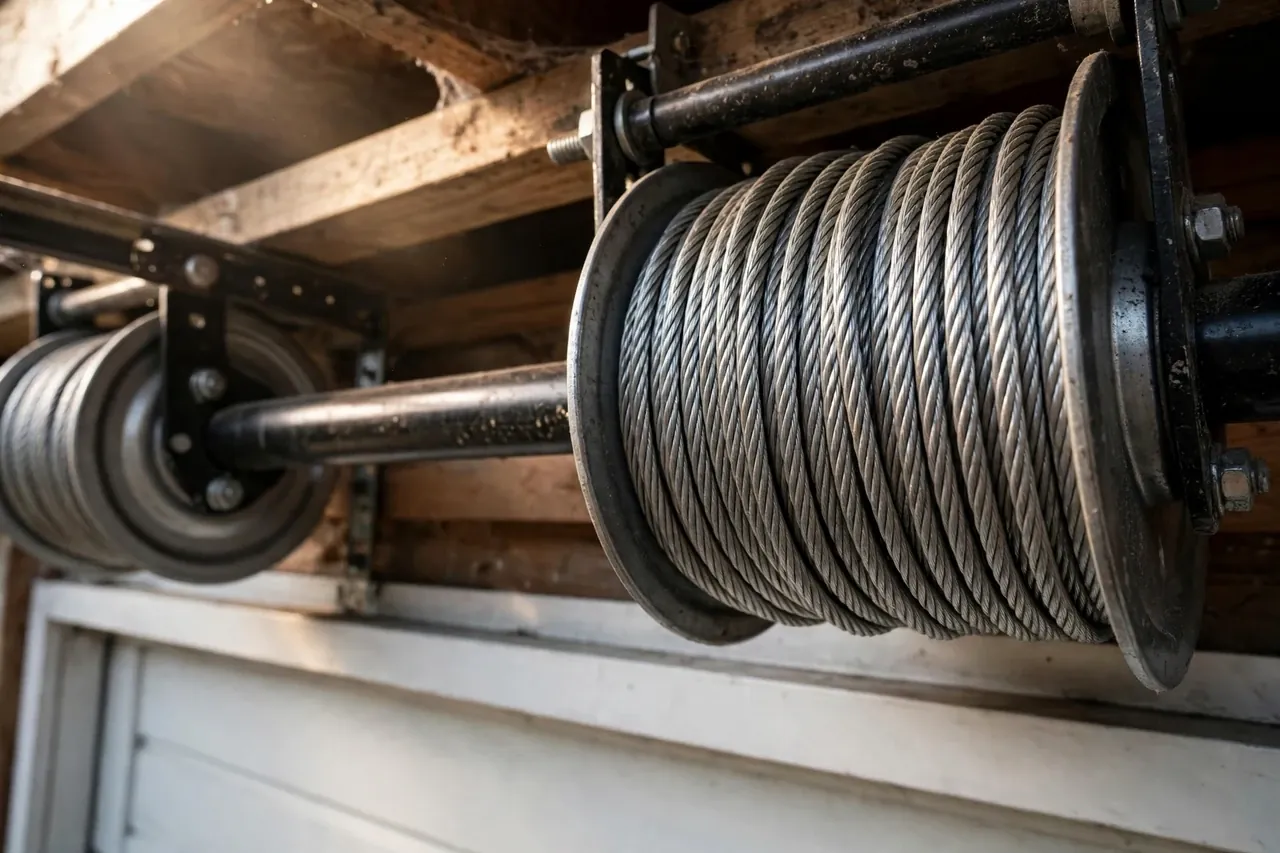
Grinding is different from other garage door noises, and the difference matters. Squeaking usually points to dry hardware. Banging usually points to a spring. Grinding or scraping usually points to rollers or tracks: metal wearing against metal, or a roller dragging where it should turn.
This guide covers the five usual causes, how to narrow down the source without touching tensioned parts, what shapes the repair scope, and the mistakes that make grinding worse. If the door binds, stalls, or hangs crooked alongside the noise, stop using it and call a technician.
The five things that cause a grinding noise
Grinding has a short list of usual causes, and they often overlap. Work through them in the order below, looking and listening rather than dismantling.
- Worn, chipped, or seized rollers. Rollers wear with use, chip at the edges, or seize on their stems. A roller that drags instead of turning grinds along the track and wears the track with it. Roller wear is a leading grinding cause in the guides' framing.
- Track problems. A bent track section, a loose bracket, or a track out of alignment catches rollers and grinds as they pass. Track damage often follows impact or follows roller failure that went unaddressed.
- Dry or damaged hinges and bearings. Hinges that have run dry, and bearing plates that have worn, can grind as the door folds and the shaft turns. Lubrication helps dry hardware; it does not fix worn bearings.
- Opener drive wear. A worn drive gear or sprocket inside the opener can grind, particularly under load from a heavy or unbalanced door. Opener grinding usually comes from the motor unit rather than the door, which helps narrow the source.
- Balance and spring problems loading the system. Weak springs leave the door heavy, and a heavy door drags rollers, strains hinges, and loads the opener. Grinding that arrives with heaviness, sagging, or uneven travel points to the spring and balance side of the system.
Why is my garage door grinding when it opens?
Grinding on opening, specifically, usually means the load is highest when the noise appears. Opening lifts the door's weight against gravity, so worn rollers, a dragging track section, and weak springs all show most on the way up. Grinding that appears only in one part of the travel points to a local cause: a bent track section, a damaged roller, or a hinge that binds at one angle.
Grinding that appears through the whole travel points to a system-wide cause: general roller wear, widespread dryness, or a balance problem loading everything. Grinding from the motor unit area, rather than the door, points to the opener drive. Noting where in the travel the noise happens, and where it seems to come from, is the most useful information you can give a technician.
Cold weather can make grinding more noticeable, as lubricants thicken and hardware stiffens, but cold does not create wear; it exposes wear that was already there. If grinding started with the cold and persists in mild weather, the cause is wear, not temperature.
How to pinpoint the source
Pinpointing is a looking-and-listening job. Do not dismantle anything, do not touch springs or cables, and do not run a door that binds or hangs crooked.
- Stand clear and listen to a full cycle. Note whether the noise comes from the door, the tracks, or the motor unit, and whether it happens through all of the travel or only part of it.
- Look at the rollers. With the door closed, look for cracked, chipped, or wobbling rollers, and for rollers sitting unevenly in the track. Look only; do not remove rollers.
- Look at the tracks. Look for bent sections, loose brackets, and debris in the channel. A bend often shows as a visible kink or a gap between the track and the wall.
- Look at the hinges and springs. Look for dry, rusted, or loose hinges, and for a visible gap in a spring coil. Do not touch spring hardware.
- Check the balance in general terms. With the opener disconnected using the emergency release, lift the door partway by hand if it moves freely and safely. A door that feels extremely heavy, drops fast, or will not stay open has a balance problem. Reconnect the opener and stop using the door if it does.
- Lubricate the right parts and retest. Lubricate hinges, roller stems, and springs lightly with a lubricant made for garage door hardware, keeping tracks clean and dry, as described in how to lubricate garage door rollers and hinges. If grinding persists after lubrication, the cause is wear or damage, not dryness.
If pinpointing finds a cracked roller, a bent track, a frayed cable, or a spring gap, stop and call a technician. Those are repair findings, not homeowner fixes.
What affects the cost of fixing a grinding door
No Zion figure for grinding repairs is stated here, and no national guide dollar figure is quoted in this post. What shapes the scope is the cause: dry hardware is the simplest outcome, worn rollers or a bent track section is a parts-and-labor job, and a balance or spring problem alongside the grinding adds spring work to the same visit.
The parts involved, the number of rollers or track sections affected, and whether the opener drive is worn all shape the scope. A door that has ground for months may have worn both the rollers and the track, which is why early attention is simpler than waiting.
Labelled national guide ranges for track, cable, roller-related, and opener work are collected in what garage door repairs cost: national guide ranges explained, each with source, date, and scope. Roller figures whose counting was unstated were dropped from that guide, and no roller figure is stated here either. Agree the scope in writing before work begins.
Common mistakes that make grinding worse
- Ignoring it. Grinding is wear in progress. Rollers wear tracks, and worn tracks wear new rollers, so delay compounds the damage.
- Greasing the tracks. Tracks stay clean and dry. Lubricant in the channel attracts grit and accelerates roller wear.
- Lubricating over broken parts. A cracked roller or bent track needs repair. Lubricant quiets the symptom briefly and hides the cause.
- Forcing a binding door. Running the opener against a binding door bends tracks, damages rollers, and strains the drive.
- Adjusting springs or cables. Balance and tension work is technician work. Leave it alone and call a technician.
When to call a professional
Call a professional when grinding persists after lubrication, when the door binds, stalls, or hangs crooked, when rollers are cracked or tracks are bent, when cables look frayed, or when the door feels heavy or drops fast. Each of those means wear or failure that needs repair, not just lubrication.
Milwaukee Garage Doors Inc is open 24 hours, every day. Call (224) 842-7761. See garage door off-track repair in Zion, IL, garage door maintenance in Zion, IL, and garage doors in Central Zion, IL.
Frequently Asked Questions
Why is my garage door making a grinding noise in Zion IL?
Usually worn, chipped, or seized rollers, a bent or misaligned track, dry or damaged hinges and bearings, opener drive wear, or a balance problem loading the system. Grinding through all of the travel points to system-wide wear; grinding in one spot points to a local cause such as a bent track section.
How do I stop my garage door from grinding in Zion Illinois?
First pinpoint the source by looking and listening, then lubricate hinges, roller stems, and springs lightly with a lubricant made for garage door hardware. If grinding persists, the cause is wear or damage, and a technician should inspect the rollers, tracks, balance, and opener.
Is a grinding garage door dangerous in Zion?
Grinding alone reports wear, but grinding alongside binding, crooked travel, a heavy door, or a frayed cable means the door should not be used until it is inspected. Stop using a door that binds, stalls, or hangs crooked, and keep clear of a door that drops fast.
Can I fix a grinding garage door myself in Zion IL?
Lubrication, cleaning, and looking for visible wear are homeowner tasks. Roller replacement, track straightening, spring and cable work, and opener drive work belong to a technician. Do not dismantle track hardware or touch tensioned parts.
Get help with Garage Doors in Zion
If your door is grinding, binding, or getting louder, call Milwaukee Garage Doors Inc at (224) 842-7761. We are open 24 hours, every day.
Read about garage door off-track repair in Zion, IL and garage doors in Central Zion, IL, or go to contact Milwaukee Garage Doors Inc.